
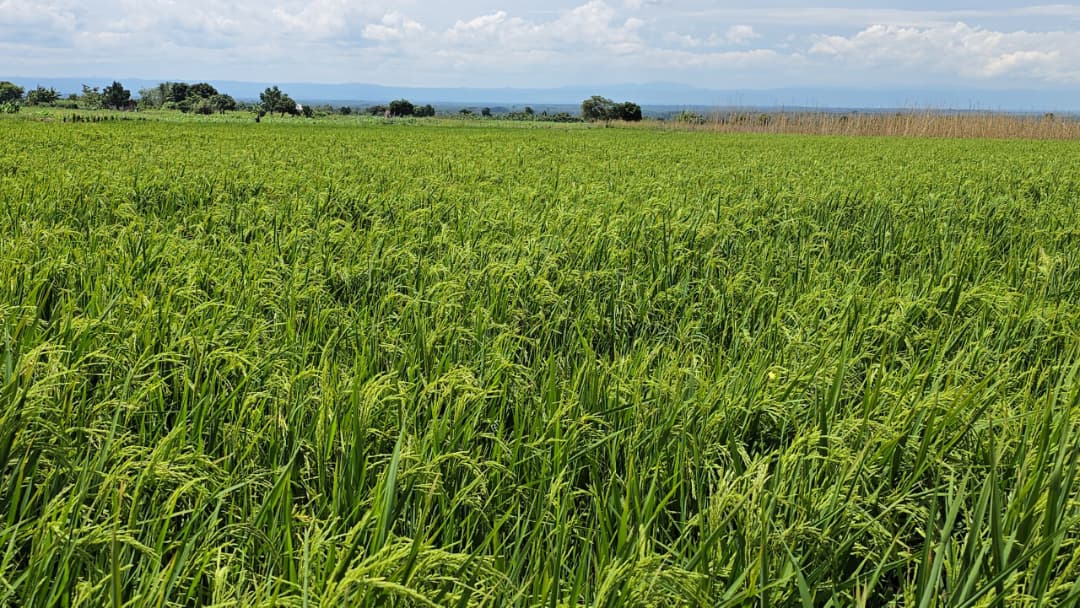
Kasese District is steadily cementing its position as one of Uganda’s leading rice-producing hubs, driven by increased productivity under the Mubuku Irrigation Scheme.
However, despite the surge in output, rice prices remain relatively high for consumers, raising concerns across the value chain.
Located at the foothills of the Rwenzori Mountains, the irrigation scheme spans more than 2,000 hectares and supports over 4,000 smallholder farmers.
Farmers in the scheme grow a mix of crops including maize and horticultural produce, but rice has emerged as the dominant enterprise due to the reliability of irrigation water throughout the year.
Kasese Municipal Agricultural Officer Asanairi Bukanywa attributes the increase in productivity to the consistent water supply, which allows farmers to cultivate across seasons.
“Access to water throughout the year allows farmers to produce continuously, giving them an advantage over those relying on rain-fed agriculture,” Bukanywa said.
“On average, farmers harvest between 15 to 18 bags of rice per acre, with some achieving up to 20 bags under proper management.”
Farmers confirm that yields have improved significantly over time. Edrick Bwambale said production has nearly doubled compared to previous years.
“Currently, we can get about 1.5 tonnes per acre. This is a big improvement compared to the past when we would harvest between 800 kilogrammes and one tonne per acre,” he explained.
Another farmer, Friday Bagonza, credits the gains to improved seed varieties and better farming practices.
“The introduction of improved seed varieties like MET 12 and MET 20, along with better agronomic practices, has greatly boosted our yields,” Bagonza said.
According to Bukanywa, the scheme produces between 10,000 and 20,000 metric tonnes of rice annually, contributing to Uganda’s national output of more than 700,000 metric tonnes.
Despite the increased production, market prices remain high, with a kilogramme of rice retailing between Shs4,500 and Shs5,500.
While this can translate into an estimated gross income of about Shs6.5 million per acre, farmers say high production costs significantly reduce their earnings.
Costs ranging between Shs4 million and Shs4.5 million per acre leave farmers with a modest net profit of about Shs1 million to Shs2 million.
Farmers also cite improvements in irrigation infrastructure as a key driver of efficiency. Bwambale points to the installation of concrete-lined channels as a major boost.
“The improved irrigation infrastructure has enhanced water flow and reduced losses, making farming more efficient,” he said.
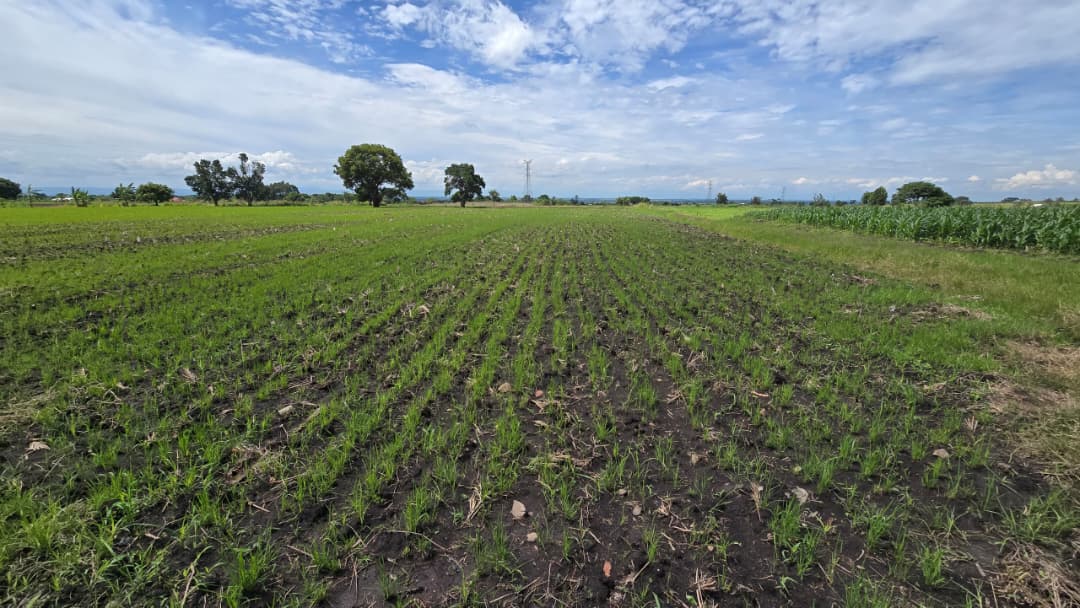
However, stakeholders argue that persistently high prices signal deeper inefficiencies within the value chain.
“Even with increased production, the prices remain high for consumers. This shows there are gaps that need to be addressed, especially in processing, transportation, and marketing,” Bagonza added.
As rice production continues to grow in Mubuku, experts say targeted interventions across the value chain will be critical to ensuring that both farmers and consumers benefit from the sector’s expansion.
